Telescopes and Observatories of the 17th, 18th, and 19th Centuries
(Initial timeline list and research taken from S. Binneweis, W. Steinicke, J. Moser (2008), Sternwarten: 95 astronomische Observatorien in aller Welt, Oculum-Verlag GmbH, Erlangen.)
This list is not exhaustive and occasionally will be updated.
1608: Hans Lipperhey tries to patent his ‘lens telescope’
1609: Galileo Galilei builds his own refracting telescope
1611: Johannes Kepler builds his own telescope and suggests naming it after him
1633: Leiden University Observatory is established
1661: James Gregory invents a reflecting (mirror) telescope
1667: Paris Observatory is founded
1668: Isaac Newton constructs the reflecting telescope now named after him
1670: Johannes Hevelius builds an open tube telescope of 46 metres focal length
1672: Laurent Cassegrain designs the Cassegrain reflecting telescope
1675: Royal Greenwich Observatory is founded
1733: Chester More Hall develops the first achromatic objective
1758: John Dolland builds the first achromatic refractor
1789: William Herschel’s 1.2m reflector is installed (in Slough)
1820: Royal Observatory at the Cape of Good Hope is founded
1844: Harvard College Observatory in Cambridge, Massachusetts, is founded
1845: Lord Rosse’s 1.83m reflector is put into operation at Birr Castle
1856: Justus von Liebig and Leon Foucault develop the first silver-plated glass mirror
1875: Meudon Observatory is founded
1882: Pic du Midi Observatory is founded
1883: University of Vienna Observatory is founded
1886: 68cm refractor at Archenhold Observatory is installed
1888: 91cm refractor at the Lick Observatory is installed
1890: Albert Michelson develops the first stellar interferometer
1897: 1.02m refractor at Yerks Observatory is installed
Notes and Images
This is a replica of what Galileo’s telescopes looked like. The Galilean telescope used a negative (concave) lens for the eyepiece, whereas the Keplerian telescope used a positive (convex) lens. The latter has the advantage of producing a better eye relief. The original telescopes Galileo built are on display at the Museo Galileo in Firenze.

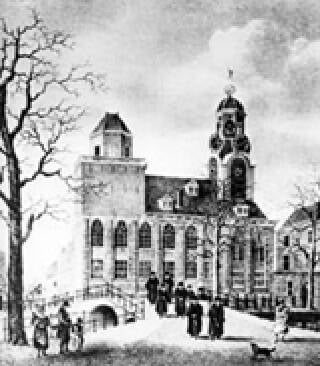
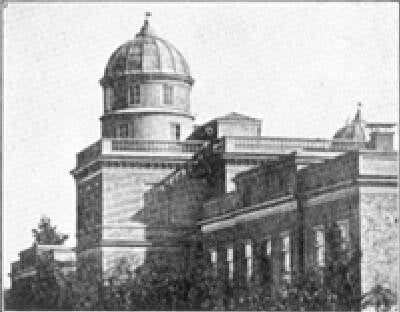
Leiden’s University Observatory was initially a relatively simple wooden structure (as shown in this image, top left) built on the attic of the Academy Building, and housed the Quadrant of Snellius. By the end of the 17th century the original observatory was enlarged and a second turret with a rotating roof was added (which possibly housed a 12-inch telescope). A more modern observatory (known as the Old Observatory) with a rotating dome was built much later, in 1860, in the university’s botanical garden.
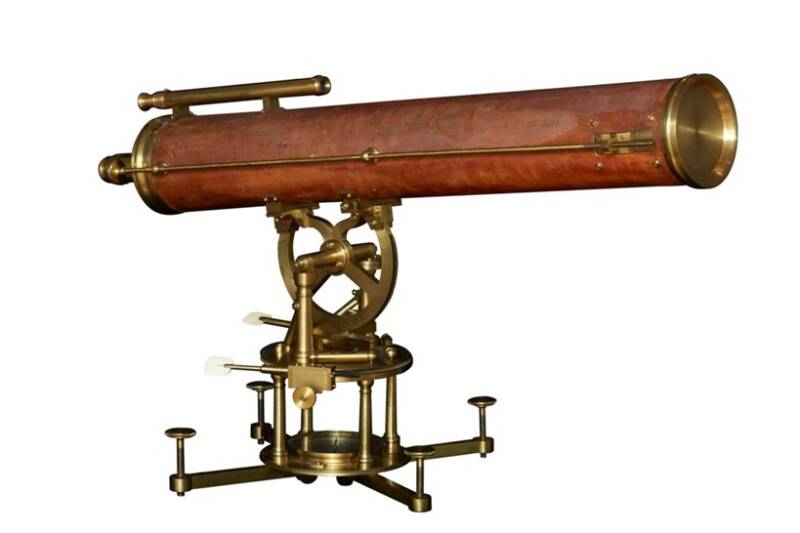
The Gregorian telescope described in 1661-1663 by James Gregory was first built in 1673 by the great polymath and scientist Robert Hooke. It was initially (but for many years) more popular than the one designed by Newton, possibly because it could be used just like a normal refracting telescope and so was easier to locate objects. An 18th century Gregorian telescope is shown here (from https://collections.st-andrews.ac.uk/item/gregorian-reflecting-telescope/1000993).
For a diagram showing the light path of the Gregorian telescope, click here.
The wikipedia entry about the Paris Observatory (founded in 1667, construction completed in the early 1670s), is quite comprehensive. Here’s the link: Observatoire de Paris
Create Your Own Website With Webador